
Asphalt Repair
Crack Filling
Stop small cracks before Rhode Island winters turn them into expensive pavement failures.
Why It Matters
A Small Crack Today Is a Big Problem After Winter
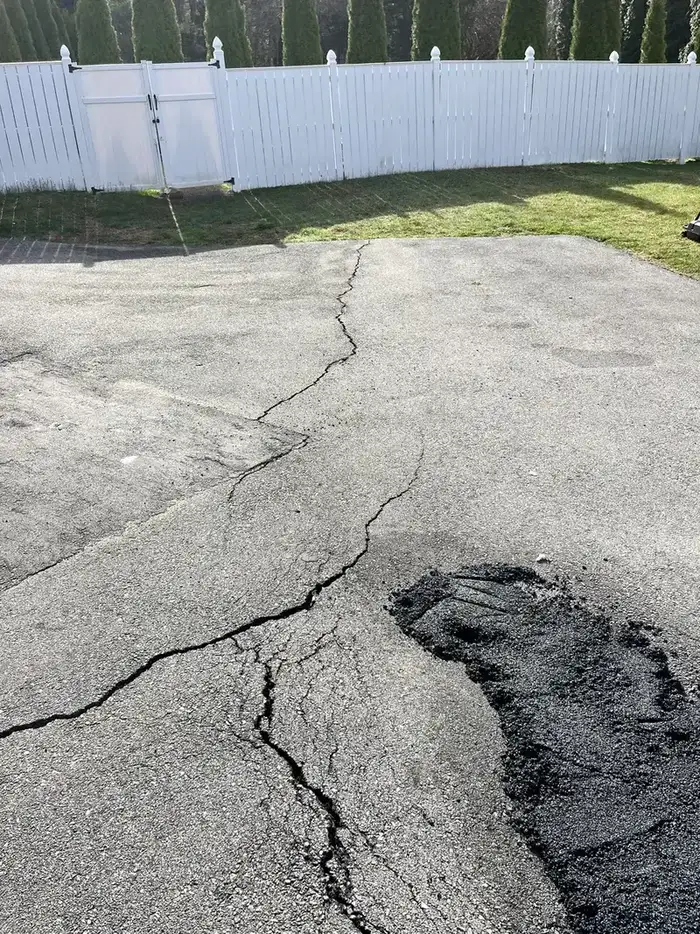
Water is the primary enemy of asphalt pavement. When a crack forms — even a hairline crack — it becomes a channel for water to reach the sub-base. In Rhode Island, that water freezes during winter, expands by roughly 9% in volume, and mechanically forces the crack wider from the inside. When it thaws, the crack doesn't close back to its original width — it stays wider. Repeat that cycle 30–50 times over a New England winter and a small surface crack becomes a structural problem.
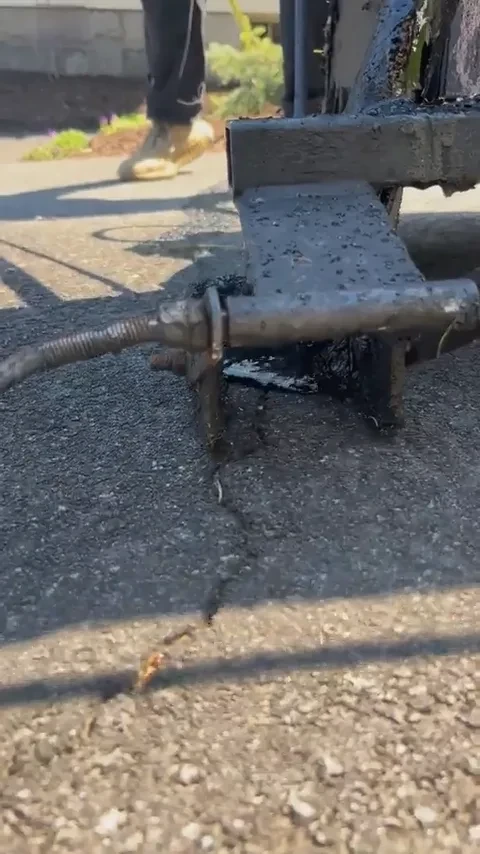
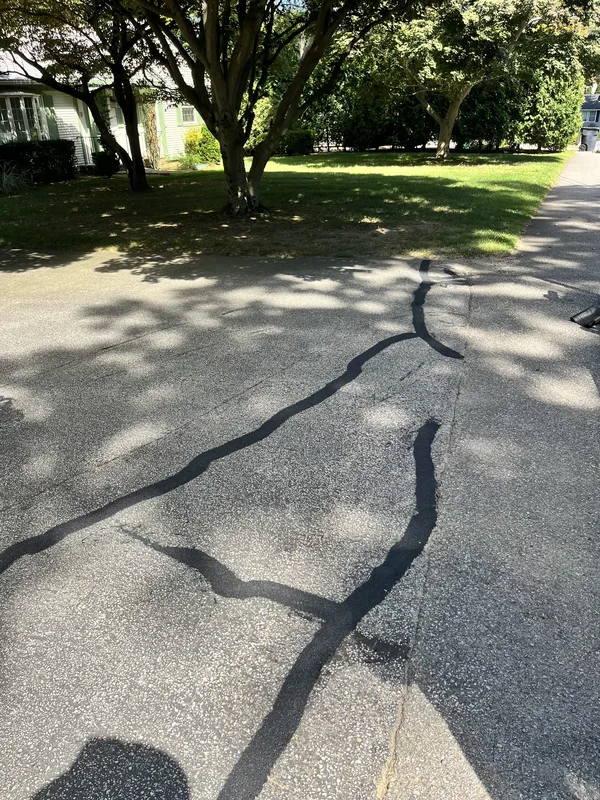
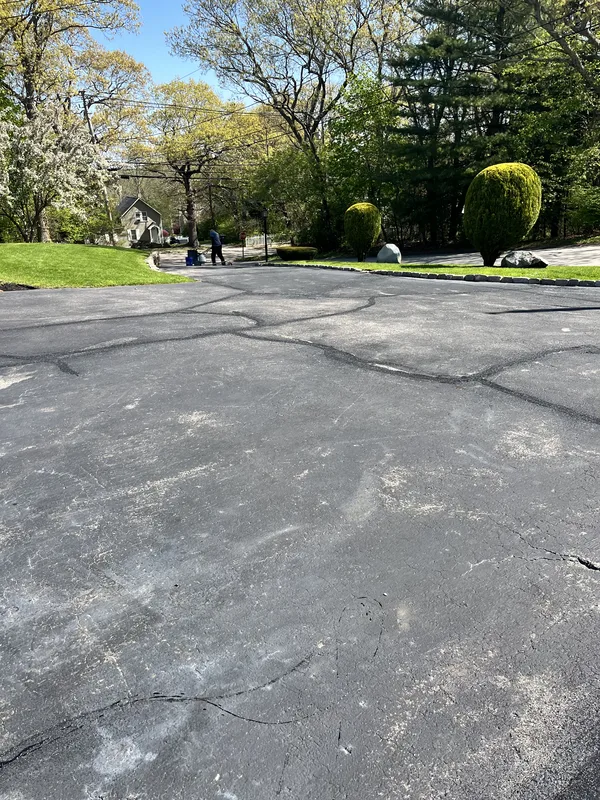
Hot rubberized crack filler is the right tool for this job because it doesn't just plug the opening — it bonds to both sides of the crack and remains flexible through temperature swings. Cold-pour crack fillers from hardware stores are rigid and tend to pop out after one or two freeze-thaw cycles. The rubberized hot-applied product we use stays in place and keeps water out season after season.
Crack filling must happen before sealcoating. Sealer does not fill cracks — it bridges over them at the surface only and traps any moisture already present underneath. The correct sequence is always: fill first, then seal. We will not apply sealer over unfilled cracks.
Our Process
How We Approach Crack Filling
Crack Mapping
We walk the full surface and categorize every crack by type and severity — hairline, working cracks, edge cracking, and spider crack zones that require a different approach.
Crack Preparation
Cracks are dug out by hand to clear loose material, debris, and vegetation from inside the crack. Clean crack walls are essential for the filler to bond properly.
Hot Rubberized Application
We heat rubberized crack filler to the correct application temperature and fill each crack slightly overfull, then squeegee flush to the surface.
Cool-Down & Inspection
We walk the surface again after the filler cures to confirm complete coverage and address any missed areas before leaving the job.
A note on spider cracking
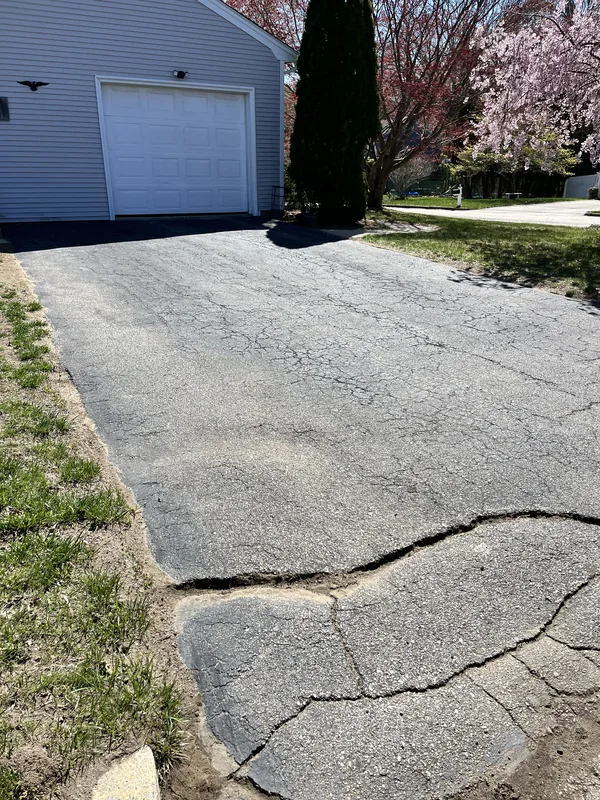
Spider cracking — the web of fine interconnected cracks that spread across an area of pavement — is not treated by filling the cracks themselves. By that stage, the underlying base damage is already done, and surface filling won't reverse it. Instead, we fill around the spider-cracked area to contain the spread into surrounding pavement that's still intact. We'll be upfront about what we're seeing and what it means.
Our Work
Crack Filling Projects
FAQ
Common Questions About Crack Filling
Get Started
Get a Free Crack Filling Estimate
We'll assess every crack on your pavement, explain what we're doing and why, and give you a straightforward price.